

Single Ladies Loved Lincoln’s Homestead Act
BOB FORD
*Bob Ford’s History is complimentary from the Nebraska Press Association.
Times were different, laws were written for and by white men, but the 1862 Homestead Act was an oddity.
In the middle of a grueling Civil War where the North had just lost several significant battles, Lincoln still needed to govern.
The Civil War had decimated eastern crop land and cost many more lives than anyone thought. To take pressure off the East and help populate the newly opened United States lands a Homestead Act had been on the table and debated among politicians for years. Not until the pro-slavery minded Southern states seceded and their senators left did Congress have the votes to finally pass the Act.
Wording of the document to settle Federal lands was historic. “That any person who is head of a family or who has arrived at 21 years and is a citizen of the United States or plans to be...and who has never borne arms against the United States government or given aid and comfort to its enemies, shall, be entitled to enter, free of costs, 160 acres.”
The Act went on to stipulate the petitioner had to live on the land for five years and “improve” the property. After that period, they would receive their deed.
The shocking revelation was that the Act designated “Head of Household,” didn’t have to be a white male. This proclamation applied to freed slaves, women and immigrants - truly one of the first equal opportunity documents to come out of the United States legislature.
One of the clear losers in the enactment were Native Americans. Already the Federal government was reneging on numerous treaties; this Act reinforced the reservation system.
During the mid-1800’s women also had very few rights, and the Act opened a door. It meant incredible hard work was ahead but also a taste of independence. A female for the first time could acquire land in her own name.
In the years after ratification, single white women invaded land offices in droves. In total 20% of all the claim registrations issued were to women. Freed slaves and immigrants could also for the first time forge their future on their own property…owning something!
A person's vow meant commitment back then; taking an oath was a personal promise before God and country. After the Civil War, Confederate veterans of the war could participate in the homestead process by pledging their allegiance to the United States. Throngs did, taking the oath of loyalty towards their past enemy in what many ex-rebels called, 'swallowing the dog.”
Over 270 million acres, or 10% of the total land mass of the lower United States was homesteaded. The National Homestead Heritage Museum outside Beatrice depicts the massive impact the Act had on the development of this country and society. The Museum sits on Daniel Freeman’s tract. Freeman was the first person to file under the Act. On the first day the proclamation went into effect, he waited 10 minutes after midnight on Jan. 1,1863, in a Brownville land office to put in his claim.
One of the earliest women to file was German immigrant and widower Mary Meyer who became Freeman’s neighbor. Single, divorced or widowed women seeking a better life flocked to land offices making claims. Married women were exempt because, of course, their husband would be considered the “Head of the Household,” unless the wife could prove otherwise.
Following ratification of the Act, I wonder if Horace Greeley considered a new quip, “divorce the scoundrel and go west young lady!”
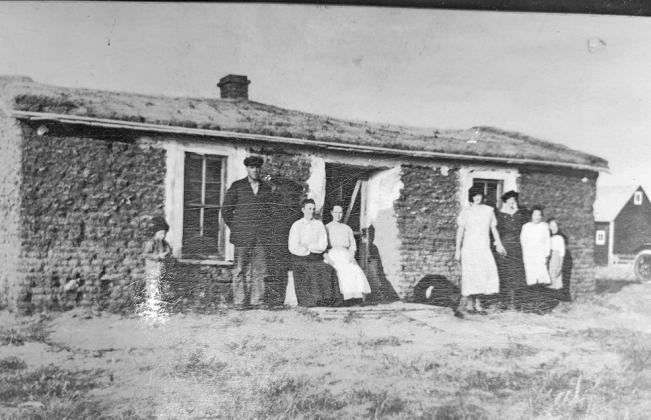
After five years living on the property, Mary Meyers had done well. To receive your deed you had to get two people to testify in writing about your “improvements.” Mary’s claim now consisted of a 16’ by 26’ house, fruit trees, grape vines, a well, chicken coop, corn bin, corral and 35 cultivated acres. All verified in writing by another neighbor and Daniel Freeman.
Among the earliest female homesteaders were the Chrisman sisters - Hattie, Ruth, Lutie and Lizzie. Custer County, as in all the northern plain states had harsh winters.