

Still Trying to Figure Out What Time it Really Is

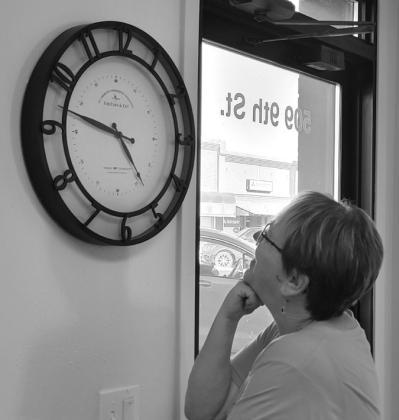
I consider myself one who adapts to change fairly easily. The changing seasons, for example, is something I love. My life has included job changes, new family members, lost family members, lots of moves, and a host of other changes that have trained me to just roll with the punches. The one change, however, that I really do not like is…the time change.
There has been an ongoing debate in Nebraska for years about Central Standard Time versus Daylight Saving Time. The Nebraska state legislature has even discussed eliminating one or the other, with mixed reviews on which - if either - should be abolished.
Here’s my take. Just pick one! There are pros and cons to both, and honestly, I’m not necessarily married to either one. I would just really like to see us choose one and stick with it…that’s all!
My husband works outside (he refers to himself as a lawn care specialist), so his preference is DST, because it gives him more daylight. Working inside all day, I also like the longer light in the evenings to get outside after work.
However, I also really like my home time. Coming home at the end of the day and getting in my jammies, cooking supper, and relaxing on the couch under a blanket is one of my favorites. That is easier to do when it gets dark sooner, so I am also a fan of CST for that reason.
According to my research, “Daylight Saving Time (DST) originated as a wartime fuel-conservation measure, first implemented by Germany in 1916 during World War I to maximize daylight hours for production and reduce energy usage. The U.S. adopted it in 1918.”
DST begins each year on the second Sunday in March, this year that was March 8, and ends on the first Sunday in November. There are two states in the U.S. that do not observe DST: Arizona and Hawaii.
According to the U.S. government’s Astronomical Applications Department, many countries observe some form of 'summer time.' Most countries in the Northern Hemisphere that observe Daylight Saving Time are in Europe and North America. A handful of nations in the Southern Hemisphere observe summer time, but their start and end times are reversed because summer in the Southern Hemisphere occurs during the Northern Hemisphere's winter months.
All of this sounds very scientific, and while interesting, it doesn’t help me feel less tired. Or less hungry at weird hours. It seems the older I get, the longer it takes my body to readjust to a time change. This week I have stayed up too late, slept in too late, and ate too late. I did however, make deadline with the paper!
I don’t know which side of the debate you are on CST or DST - and like I said, neither is a hill I choose to die on. My body is just telling me to settle on one or the other.
Is it bedtime yet?