

All About Oak Trees, And The Fruit They Produce

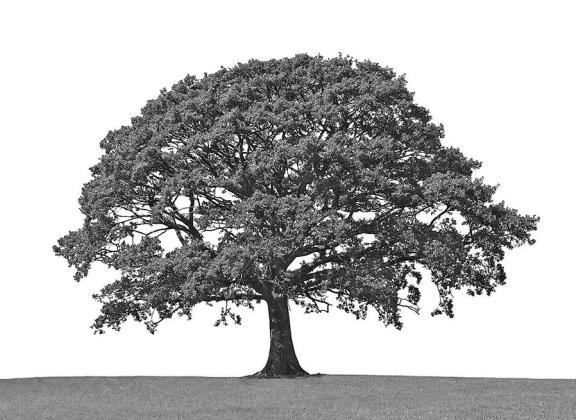
I’ve written about the Peyton tradition of planting a tree for a child’s birth. For our youngest son, we planted a red oak. That tree is now 35-years-old, and this year, for only the third time, it produced an abundance of acorns. According to the Internet, oak trees don’t start producing acorns until they are about 20-years-old. After that, about every three to five years is a “mast” year in which they produce a lot of acorns. That holds true for Alex’s Oak because it has been on a three to five-year cycle, producing acorns three times.
There are a number of things other than age that can affect acorn production. A late frost, for example. This is true for all fruit trees, and yes, oaks are fruit trees. Their fruit is the acorn. An extreme winter can also stop acorn production, and the “magic” low temperature for Alex’s red oak is -30*F.
The purpose of the fruit is to disperse the seed. It doesn’t do the parent tree or young trees any good for the seeds to germinate right under the parent tree. In fact, some trees like the black walnut release toxins from their roots that can prevent the germination of seeds in an area surrounding the tree. Out on the desert, creosote bushes do the same. It reduces competition for resources. For the creosote bush the resource is water and for the walnut it is sunlight.
Oaks are popular trees, and they come in more than 500 different varieties, 90 of which are native to the U.S., and seven that are native to Nebraska. Years ago, Alex’s oak was producing a lot of acorns, and my squirrels were eating them, which made it impossible to walk out my back door barefoot because of the shells! At that time, I walked around the lake and noticed that a number of oak trees there were also producing a lot of acorns.
Remembering that, and noting the number of acorns Alex’s tree was producing this fall, I again took a walk on the trail north of the lake. That trail takes you by a number of oak trees, most of which had hundreds of broken acorn shells on the ground surrounding the trees.
The same was true for the local bur oak and the scarlet oak. Bur oaks are the most common native oak in Nebraska, and the scarlet oak, while not native to Nebraska, is common just east of us in Missouri.
I don’t know how old the oaks in our local park or at the lake are, but oak trees can live for a very long time. In Savanna, Georgia, for example, there are two large, old oaks. One, the Candler Oak, a southern live oak in downtown Savanna, is at least 300-years-old and the Majestic Oak, a red oak located about seven miles away, may be 100 years older. Those are not the oldest. In Charleston, South Carolina, there is the Angel Oak that is estimated to be 500-years-old, and in Mistley, England there is an old English oak believed to be 800-years-old. Here in Nebraska, a bur oak named the Old Wolf Oak in Ponca State Park was the largest and oldest tree in the State at 380 years of age…until, sadly, it died last year.