

Uncovering The History and Meaning Behind June’s Holidays

The month of June includes two American holidays that seem to be slightly obscure and confusing to a lot of us. After recently discovering that I may not be the only one to not fully understand the meaning of these two observed holidays, it seemed like a good idea to inform myself and the public on the meaning behind them.
We begin with Flag Day, celebrated each year on June 14. The day commemorates the adoption of the American flag with its 13 stripes and stars on June 14, 1777. It took a long time, however, to get the nation’s leaders on board with the idea.
First proposed in 1861, the original intent was to help rally the troops, so to speak, for the Union side of the Civil War. Little was done with the idea until 1916, when President Woodrow Wilson signed a declaration designating June 14 as Flag Day. It wasn’t until Aug. 3, 1949, that Congress officially established National Flag Day. Pennsylvania was the first state to celebrate Flag Day as a state holiday in 1937.
Congress enacted the third and last Flag Resolution in 1818, requiring that the number of stripes should remain 13, and the number of stars should always match the number of states. Between 1777 and 1960 (after the admission of Hawaii in 1959), there were 27 versions of the flag - 25 involving changes in the stars only.
Though not an official federal holiday, federal law leaves it to the discretion of the president to officially proclaim the observance. Each year, the president delivers an address that proclaims the week of June 14 as National Flag Week, and all Americans are encouraged to fly U.S. flags during that week.
The second holiday this month that may be a little misunderstood is celebrated today, June 19, on what has become known as “Juneteenth”. If you are wondering why you didn’t learn about this holiday in school, the answer is simple - it wasn’t a national holiday yet.
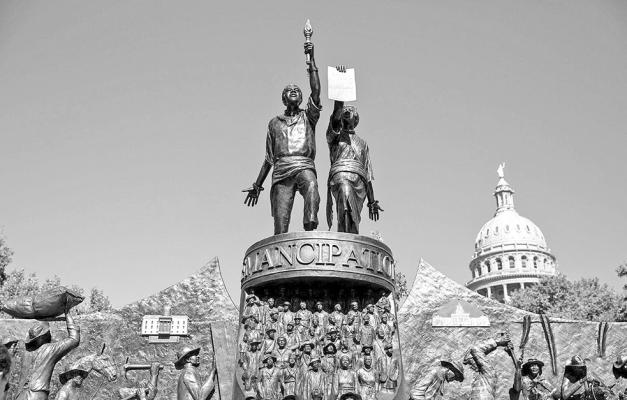
Juneteenth was designated as a federal holiday on June 17, 2021, by President Joe Biden, more than 150 years after the event that led to its founding. Though President Abraham Lincoln signed the Emancipation Proclamation in 1863 that freed slaves in Confederate states, its enforcement was limited in Texas because it was still under Confederate control.
On June 19, 1865, Major General Gordon Granger and his Union soldiers arrived in Galveston, Texas, with news that the Civil War was over and all enslaved people were free. Black Texans began celebrating the day as “Juneteenth” one year later, and it is considered to be one of the oldest continuing African American holidays.
Though the day has been celebrated somewhat quietly in the African American community since 1866, following the murder of George Floyd on May 25, 2020, activists used Juneteenth celebrations to amplify their calls for federal recognition, which ultimately led to its designation as a federal holiday. However, it had been recognized as a state holiday in several states long before that. Texas was the first state to declare Juneteenth a state holiday in 1980, and others quickly followed suit.
Both of these holidays serve as reminders of very important events in American history, and most importantly, as symbols of freedom. As our Pledge of Allegiance states: “One nation, under God, with liberty and justice for all.”
Sources: Britannica, Wikipedia, National Museum of African American HIstory .