

Keep Your Eyes Open; Hummingbird Season Has Arrived

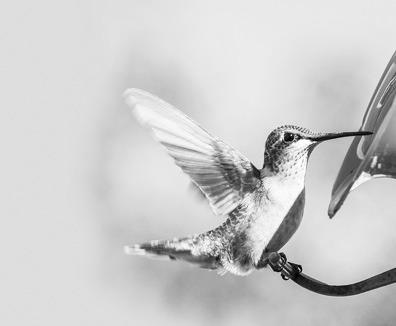
We have hummingbirds in our area. I’ve seen them in my yard, in Jenny Raymond’s yard, and I’ve had reports of them from other locations here in town and a pair from south of town that had a nest with eggs.
The hummingbird species that I’ve seen here in Gothenburg is the ruby-throated hummingbird. This little flyer is the most widespread hummingbird in North America. It is found from mid-Nebraska (here!) to the Atlantic coast, from Panama to Canada.
While we do have five other hummingbirds that migrate through the state, the ruby-throated hummingbird is the only one that nests here. This hasn’t always been the case. The habitat for the smallest bird in Nebraska is deciduous forests. Given the expansion of deciduous trees westward along the rivers in Nebraska, the species is now seen as far west as Keith County.
The nest is small, only two inches across, and it is usually located about 10 feet off the ground. After mating, the female will lay from one to three eggs, which will hatch after two weeks. The young are “altricial” which means they are naked, their eyes are closed, and they cannot maintain their own body temperature. The male will soon leave and look for another female leaving the first female to finish caring for the young.
The nestlings mature within three weeks and then they are ready to leave the nest. The female will then find another mate and produce a second brood. Generally, about mid-July the males start to migrate back south with the females leaving after the second brood is completed. Migrating ruby-throated hummingbirds from up north can still be seen here in Gothenburg as late as October.
Everyone knows that hummingbirds feed on the nectar of flowers or the sugar water in a feeder. However, hummingbirds, like all animals, need protein so they also eat a lot of insects that they catch either on the fly, or that they pick out of spider webs! They also eat the spiders.
While ruby-throated hummingbirds are the smallest birds in Nebraska, they are 14% larger than the vervain hummingbird of Jamaica and Puerto Rico and 15% larger than the smallest bird in the world, the bee hummingbird of Cuba.
Devin Brundidge, Carol Skinner and I once spent an hour watching a bee hummingbird in Cuba feed on flying insects. It is hard to imagine just how small they are, weighing in at only 7/100’s of an ounce!
In comparison, our ruby-throats are “porkers” at 2/10 of an ounce! The largest hummingbird in the U.S. is the blue-throated mountain-gem. It weighs in at a little over half an ounce! It can be found along the Mexican border.
If you want hummingbirds in your yard plant honeysuckle, bee balm, cardinal flowers and trumpet creepers. You can also put out feeders from April through October with a mixture of four parts water and one part white granulated sugar. Other sugars are actually bad for the birds. You also need to clean the feeder at regular intervals.