

Addressing the Need for More Nurses in Rural Healthcare
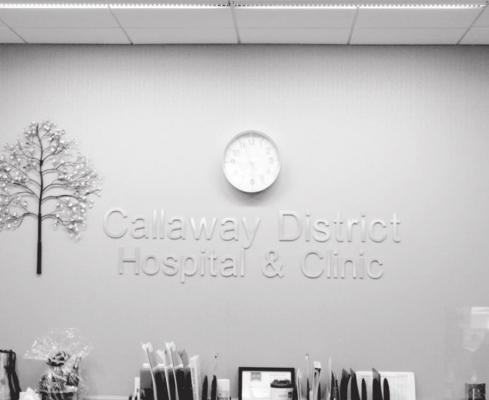
Rural communities like Callaway rely on the accessibility of quality healthcare, but in the last two years that industry has been hit exceptionally hard. Between the pandemic and the aging population of active nurses and healthcare professionals, the future of rural healthcare could be in jeopardy. According to the Nebraska News Service, the latest report from the Nebraska Center for Nursing shows nearly 4,200 more nurses are needed to meet statewide demand, with that shortfall expected to approach 5,500 positions by 2025- a figure equivalent to 19% of the current workforce. Those statistics are alarming, and have some rural hospital administrators scrambling for solutions.
"It's not that we have ever been out of a nursing shortage - you are always looking for staff in a rural facility. So a nursing shortage is nothing new for us, but I will say it is progressively getting worse as we see our licensed nurses retiring and our nursing population getting older," explained Brett Eggleston, CEO of Callaway District Hospital. "We don't seem to have that steady stream of new nurses coming in."
That is something that the Callaway facility is working to address and change through a program offered at the University of Nebraska-Kearney called KHOP-Kearney Health Opportunities Program. The program at UNK is in partnership with UNMC (University of Nebraska Medical Center) for the nursing college and health sciences college in Kearney, Eggleston said.
Eggleston and Callaway District Hospital CFO Caleb Poore are meeting with representatives of that program to discuss how Callaway may be able to partner with that program to offer some rural nursing internship and getting nurses into some of the smaller facilities.
"The long-term goal is to truly train them into jobs in our rural hospitals," Eggleston added. "You've got to have a stream of nurses to fill those positions, and if you don't do that you are not going to be successful."
Poore said KHOP is beginning the recruitment process for nursing and healthcare related programs at the high school level. "The more you can establish the relationship and show them the profession, and get their feet wet, that's really going to yield the best result long-term for these kids to get into health care," he said.
Eggleston agrees, and added, "Especially with these rural facilities, if you home grow some of those people, they will want to move back to an area that they are familiar with which is a lot easier than to find somebody from Lincoln or Omaha and trying to convince them to move to a town of 600 people."