

Barn Swallow Chosen as 2025 Mascot Bird

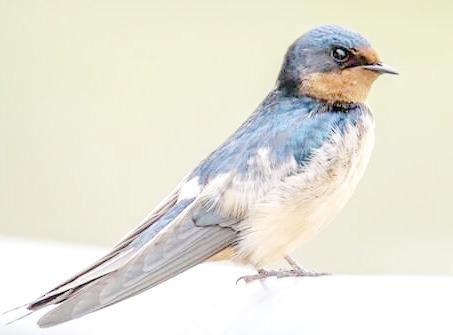
Previously I wrote about the Cornell Lab and one of their Citizen Science projects called the Great Backyard Bird Count. Each year, building up to the four-day event in February, a “mascot” bird is chosen for the poster that advertises the event. Because thousands of people in hundreds of countries participate in the project the chosen mascot has to be common throughout the world. This year that bird was the barn swallow.
The barn swallow is the most widespread swallow in the world. It is found in the New World from Alaska to the tip of South America, the Pacific Ocean to the Atlantic, except in southern Florida. It is found all across Europe and Asia all the way to the Pacific Ocean, from northern Russia to the Mediterranean. In Africa they are found south of the Sahara to the Cape of Good Hope.
Barn swallows are one of seven different kinds of swallows in Nebraska joining bank swallows, cliff swallows, rough-winged swallows, tree swallows, violet green swallows and purple martins.
Barn swallows are easy to identify and fun to watch. They feed on flies and other insects, and they make nests just about any place there is an overhang. Many people don’t like the nests because the swallows poop over the edge of the nest and onto whatever is just below. Barn swallows have one or two broods of up to seven young each summer. They incubate the eggs for about two weeks and then feed the young for two to four weeks.
Male barn swallows can be naughty. An unmated male may sneak into an unguarded nest and either destroy the eggs or kill the nestlings. This causes the parents to break their pair bond and start looking for another mate. The killer male “hopes” to be the one the recently separated female will choose!
Flip that around and after they fledge (learn to fly) the young from the first brood will help bring food for the growing nestlings in the second brood! There are two Native American legends concerning the barn swallow. One is the swallow stole fire from the gods and brought it down to earth for the people. The gods were not happy and shot burning arrows at the bird with one arrow hitting the middle of the tail leaving the long outer feathers. The Hopi credit the barn swallow for saving them from starving by bringing them corn seed. There is also a legend that barn swallows tried to remove the crown of thorns on Jesus’ head while he was on the cross.
The split tail of the barn swallow is what makes it easy to identify. Ornithologists believe the split tail design makes the swallow more maneuverable in flight. No other swallow has the split tail.
Barn swallows migrate and they are presently on their way north. Generally, the first sightings of barn swallows here in our area are in late March and early April. They don’t form large flocks in the spring because they are spreading out and looking for likely nesting areas. However, once they are done nesting in the summer, they form large migration flocks. For example, in September of 2022 an estimated 11,000 barn swallows were seen in a flock near Scottsbluff.
Look around because all the swallows of Nebraska start showing up at this time of year. Just another sign that spring has arrived.