

The Sounds of Spring Are Music to Bird Enthusiasts

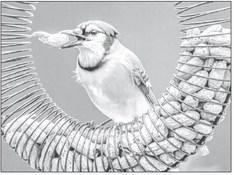
Yep, spring has arrived. I didn’t need a calendar; I saw proof of it in my back yard. Nope, not robins, though there are robins around and they are calling incessantly. They weren’t turkey vultures either, though they too are a sign of spring, usually arriving in this area of Nebraska this week. The “spring” birds that were in my yard were grackles! A couple of hundred of them.
Most people don’t like grackles. These were common grackles, and we also have the great tailed grackles. I haven’t had the great tails in my yard, but I do see them in the parking lot of McDonald’s fairly often. They are more of a wetland bird and the tailrace attracts them. Also, they are smart. You see them in the parking lot because they are picking the bugs off the bumpers of the cars parked there!
During the spring millions of birds either fly over Nebraska or stop here. Over 200 different species will stay and nest and an additional 200 different kinds will just keep going north. According to the Cornell Bird Lab over 55 million birds flew over our county from March 1st to June 15th last year, with a peak of 706,300 on the night of April 29.
The Cornell Lab was founded in 1915. The mission of the Lab is to advance the understanding and protection of birds…through research, education, conservation and citizen science. “Citizen Science” simply means that people from all over volunteer to collect data and then send it to the Lab for analysis. A couple of examples are Feeder Watch, a six-month long period each year in which volunteers document what birds are coming to their feeders and how many of each kind there are. Last year over 16,000 people submitted information. Data submitted from our county had the American goldfinch as the most common bird seen followed by the dark-eyed junco and then house sparrows.
The second Citizen Science program sponsored by the Lab is the Back Yard Bird Count. During a fourday period in February this year 838,113 people in 217 different countries counted a total of 8,078 different kinds of birds. The three most common birds seen in the U.S. were the northern cardinal, the dark-eyed junco, and the house finch. In my yard it was the European collared dove, the juncos, and blue jays.
While the largest number of participants were from the U.S., the greatest number of different kinds of birds was from Columbia with a total of 1,374 species. Second was Ecuador with 1,129 species and then Brazil with 1,091. The U.S. was #12 with 670 different kinds of birds reported.
Feeder watch had its beginnings in Canada in 1976 and was expanded to include the U.S. in 1987. The Back Yard Bird Count was started in 1998. The data collected each year can be compared to previous years and various trends can be determined.
For example, data shows that the common grackle populations are decreasing at an alarming rate. Those who don’t like grackles may welcome this, but I would miss them if they disappeared all together, and besides, if they were gone how would I know when spring has arrived?