

Callaway Students Heading To Indy
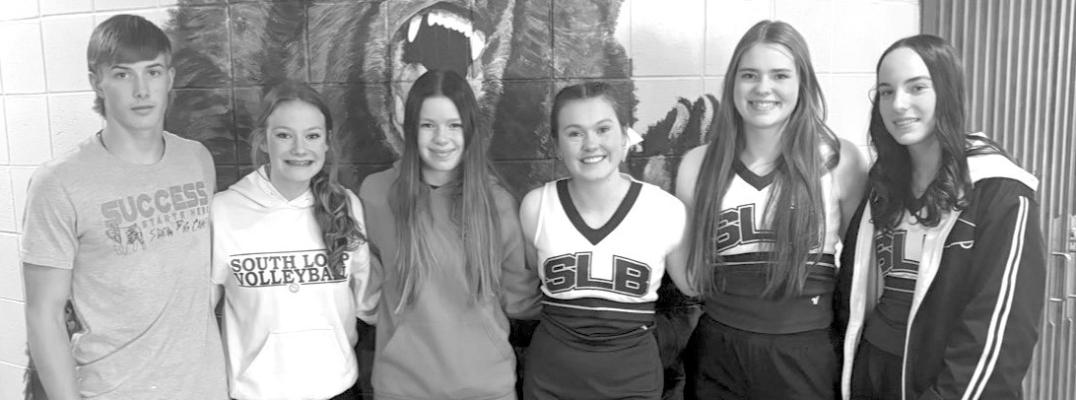
Six Callaway High School FFA members are heading to Indianapolis, Indiana next week for the 96th Annual National FFA Convention and Expo. The convention is held each year in Indianapolis, and this year will be from Nov. 1-4.
CHS FFA Advisor Amanda Chytka will be leading the group on the trip. While none of the students will be competing in any events while at the convention, it provides a wonderful opportunity in many ways.
“They get the opportunity to network with people around the United States that have the same interests, attend leadership workshops, and connect with leaders in all aspects of the agriculture industry,” Chytka explained. “We will also have a chance to tour the Indianapolis Motor Speedway & Museum. We will be able to see the process of how these cars are built and take a trip around the track.”
The entourage will leave on Tuesday evening, Oct. 31, and head home on Saturday, Nov. 4.
The National FFA Convention & Expo is all about growing the next generation of leaders. No matter where they are in FFA, the convention offers opportunities through special speakers and workshops for students to find inspiration and direction to become leaders and influencers, ready to make an impact. Sending students to events such as this is truly an investment in the future. locked up indoors, to me, is cruel and it goes against their natural behavior. Letting them outside is also cruel because their natural behavior is to kill things, things like the pair of house wrens that tried to nest in my yard a few years ago!
We call them domestic cats; though a huge portion of the world’s population of domestic cats are actually feral cats…not domestic at all. They are probably the most efficient killers in the world. One estimate is that feral cats alone kill 1.5 billion birds every year.
I once worked on a wind project in Kansas with a bird biologist. He was writing the environmental impact statement of 100 giant wind turbines. The study consisted of transects that were checked weekly for two years prior to construction. Then, once the wind turbines were in operation, they were to be checked again weekly for two years. The concern of the Fish and Wildlife Service was that these turbines would kill a lot of birds, birds protected under the Migratory Bird Treaty Act of 1918.
Based upon a previous study, Rick had an idea of how many birds 100 towers would kill, so to mitigate that damage he actually wrote in the assessment that his company would kill 10 feral cats a year for 10 years. One study found that one feral cat kills 40 to 50 birds a year. Thus, 10 feral cats, on average, would kill approximately 500 birds each year and according to the study, the 100 towers would, at their worst, kill only about 100. Needless to say, the Service did not appreciate his mitigation measures, and he had to change them.
My cats are not the only ones in the neighborhood. We have a couple of feral cats that live in the storm drain. I was watching one and that is what got me to thinking about feral cats. The other impetus for this essay is that Oct. 29 is National Feral Cat Day.
My cousin traps feral cats in Texas and has them neutered and re-released. The hope is that the sterile ones will keep the fertile ones away. A few studies have shown that, while well intended, it doesn’t work.
Each study on the effects of sterilization on the overall population of feral cats recommended euthanasia instead of sterilization. So maybe the 29th should be renamed “Catch and Kill a Feral Cat Day!”
Anyway, our three cats are sterilized and the hope is that with time, just like in the sterile feral cat program, we will have fewer and fewer of them. That’s the hope but cats can live for 15 – 20 years and our oldest is 15, so it looks like my yard will not be safe for house wrens for at least a few more years!