

Nursing Home Association & Senators Vow To Fight Mandate
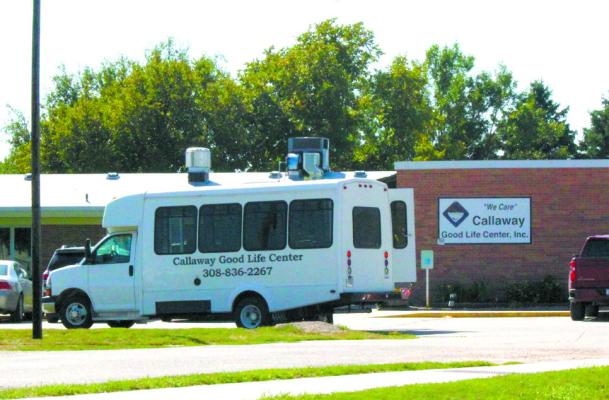
*Editor’s Note: Last week we investigated a proposed staffing mandate that if passed would have a hugely negative impact on rural nursing homes. In part two of our series we see who has taken up the fight to protect our long-term care, and why.
McKnight’s Long-Term Care News reported that at last week’s AHCA/NCAL (American Health Care Association/ National Center for Assisted Living) Convention in Denver leaders of the nation’s largest nursing home association vowed to “continue to fight against and eventually triumph over a proposed federal staffing mandate that would cost providers as much as $6.8 billion annually and require facilities to hire 100,000 new workers.”
Our representatives in Washington have also taken up the fight, with nearly one-third of the Senate signing a letter asking CMS to withdraw the mandatory staffing rule. This is not the first letter the Senate has submitted, with 13 senators - including Nebraska representatives signing a letter back in January prior to the mandate being released.
“In many parts of the country, America’s long-term care facilities are facing severe workforce shortage issues that are harming access to critical care for our nation’s seniors,” the senators wrote. “With this in mind, we are deeply concerned that now is the worst possible time for the United States to establish the nation’s first federal staffing mandate for long-term care facilities. We believe the rule as proposed is overly burdensome and will result in additional closures and decreased access to care.”
AHCA President and CEO Mark Parkinson noted that long-term care is still experiencing a 10% decline in workforce post-Covid, while all other healthcare sectors have rebounded.
CMS (Center for Medicare and Medicaid Services) released the long-awaited staffing mandate on Sept. 1, which would require nursing homes to provide 0.55 hours of direct RN care per patient day and 2.45 hours of nurse aid care. While the rule would go into effect three years after being finalized, it gives an extra two years for rural facilities to get up to speed on the overall hourly rate. Rural facilities would have an extra year to meet the proposal for 24/7 RN coverage while all other nursing homes would have just two years after the rule is finalized to meet this requirement.
The rule, wrote Kimberly Marselas, a senior editor of McKnight’s Long-Term Care News, has the potential to change nearly everything about the skilled nursing workforce, from the total time direct care staff spend with patients to the oversight and hands-on care provided by a lot more registered nurses. “But there may be no one as worried as the thousands of licensed practical nurses who currently provide critical services in skilled nursing.”
The article states that according to the Bureau of Labor Statistics, 35% of the 655,000 LPN roles in the US last year were in nursing and residential care facilities. Of those, only about 56,000 are working in assisted living or similar facilities.
“So that leaves about 175,000 LPNs in nursing homes — critical staff members who might no longer fit into the SNF job market if the proposed rule is finalized as currently written,” Marselas shared.
While CMS says LPNs can and should stay in long-term care facilities, the question becomes how can skilled nursing facilities be expected to continue paying for LPNs who won’t help them comply with staffing rules, especially if they also will have to hire a bunch of RNs at even higher rates?
Marselas noted that while some options seem to be getting the attention of CMS, “Indeed, a tried-and-true (but intensely vigorous) comment campaign may be the best way to see light at the end of this tunnel.”
Everyone reading this is encouraged to reach out to Sen. Deb Fischer by email at fischer.senate.gov or call her Washington, D.C. office at (202) 224-6551.