
LOUP LINES: The Scoop On Our NRDs
ALAN BARTELS, INFORMATION & EDUCATION COORDINATOR
I’d heard of Nebraska’s Natural Resources Districts, but before I joined the staff of the Lower Loup NRD (LLNRD) a couple of years ago, I didn’t know much about the organization’s work. Heck, I was friends with several LLNRD staff members and still had no idea.
Nebraska’s Natural Resources Districts are local government entities charged under state law with protecting our state’s natural resources. Established by the Nebraska Legislature in 1972, the Lower Loup NRD, and all of Nebraska’s Natural Resources Districts, are assigned these broad responsibilities and authorities:
• Erosion Prevention and Control
• Prevention of Damages from Flood Water and Sediment • Flood Prevention and Control
• Soil Conservation
• Water Supply for Any Beneficial Uses
• Development, Management, Utilization, and Conservation of Groundwater and Surface Water
• Pollution Control
• Solid Waste Disposal and Sanitary Discharge
• Drainage Improvement and Channel Rectification
• Development and Management of Fish and Wildlife Habitat
• Development and Management of Recreational and Park Facilities
• Forestry and Range Management Realizing that pollution and environmental issues are rarely, if ever contained by political boundaries, Nebraska legislators in the late 1960s and early 1970s wisely created the NRD system along natural watershed boundaries.
The Lower Loup NRD is the largest of Nebraska’s 23 Natural Resources Districts, making up all or parts of 16 counties and encompassing more than 5 million acres. The district measures 96 miles north to south, and 156 miles from the Sandhills in the west to fertile farmland in the east. Our district is larger than many U.S. states, contains 514 miles of flowing rivers, and is home to more than 10,000 active irrigation wells.
Directors elected by voters within each district form the boards that govern these entities. Twenty-one local representatives serve on the LLNRD Board of Directors.
The crew at the Lower Loup NRD includes general manager Russell Callan and assistant general manager Tylr Naprstek. Anyone who has called the LLNRD office or walked in the front door over the last two decades has been greeted by receptionist Jane Klanecky’s always cheerful voice. Another longtime LLNRD employee – programs assistant Cheryl Hornickel – has worked at the Lower Loup NRD for more than 45 years!
The team also includes bookkeepers, administrative assistants, district secretaries and water programs staff, education and communications people, a conservation forester, parks and maintenance workers, a water modeling coordinator, a district engineer, an agronomist, seasonal workers and interns, and a varied crew of other professionals that we casually refer to as technicians.
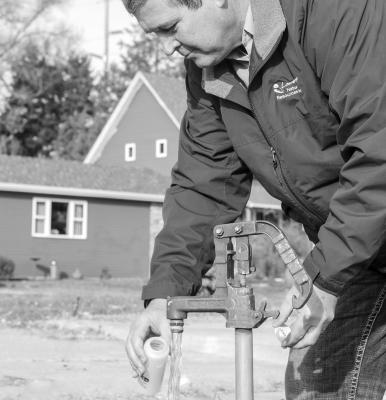
These hard-working technicians are often in the field before I get to work and regularly return after I have left for the day. When I do see them, they are often sweaty, muddy, and tired after a long day spent planting trees, collecting soil samples; checking irrigation, domestic, livestock and monitoring wells; sampling for water quality at lakes and reservoirs, inspecting chemigation systems, flow meters, and cover crops for producers; installing drip irrigation systems, tending to research plots, and a host of other important conservation-related activities. Several of them work out of the Ord headquarters. Others are stationed at field offices in Fullerton, Broken Bow, Spalding, and Columbus.
Maybe you are like I once was and didn’t know much about the work of the Lower Loup NRD. This article provides only a small glimpse into the organization’s mission, and I hope it has opened your eyes a bit and maybe even engendered some appreciation. Regardless, you can be confident that each of these workers is a true professional dedicated to protecting our natural resources for future generations