

Flat Earth, Tall Corn - And How Technology Has Changed
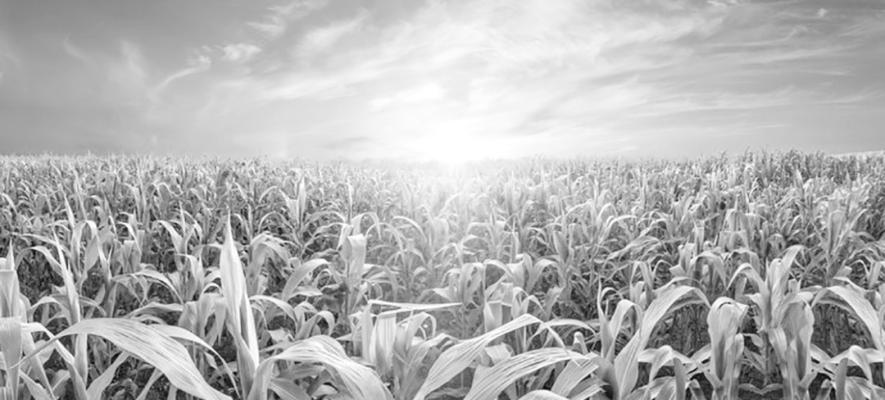
Grandpa used to talk about corn being knee-high by the fourth of July. When he was a young man, a corn crop was off to a good start if it was that tall by Independence Day. The old saying is no longer the standard, nor is grandpa still a young man; in fact, quite a little has changed since the 1950s. In 2023, in this part of the world, there will probably be corn shoulder high (or very near that) by the fourth of July.
What has changed? Obviously, the earth is flatter now than it used to be. I know this because I recall the older generation telling stories of walking to school uphill both ways. Personally, when I went to school, it was all downhill. But other than that, what accounts for more prolific crops? Technology has given us more than just social media, and the ability to see what anyone is eating for lunch at any given time. It has also given us better farming practices, advancements in farm machinery, and stronger genetic packages. All of these things have combined to make the American Farmer one of the most efficient in the world, probably in the whole galaxy.
First, let’s take a look at farming practices. Generally speaking, in our area there are two primary production practices used, either strip-till or no-till. No-till is just what it sounds like, it is farming without disturbing the soil with tillage practices. Major advantages to no-tilling include retaining valuable moisture in the soil, decreased soil erosion, potentially less weed pressure, and fewer trips over the field. This style of farming does come with a few challenges, however, that are addressed in strip-tilling. When a farmer strip-tills, they are preparing a small strip in which the crop will be planted. Only a small band is tilled right where the row will be planted, leaving the rest of the soil undisturbed. It helps with managing leftover crop residue from the previous year, allows fertilizer to be put down, as well as helping the soil to warm up quicker than strictly notill. In a wetter year, it can allow a field to be planted sooner than either no-till or conventional till would. Both systems require less trips through the field than a conventional till system, potentially allowing for earlier, quicker planting.
What about farm machinery? Sometime in the early 1950s, my grandpa bought a brand new Farmall M. It had 36 pto horsepower and was able to pull three 16inch plow bottoms according to Farmall marketing information of the day. The tractor was also able to pull a 4-row planter or cultivator. The M was two-wheel drive, not much for creature comforts by today’s standards, held 21 gallons of fuel and could weigh up to 6,770 pounds. It wasn’t quite the biggest tractor of the day, but very close.
Contrast that to the largest tractor built by John Deere today, the 9R640. This monster tips the scales at 67,000 pounds, holds 400 gallons of fuel, and comes in at an impressive 335 pto horsepower according to tractordata. com. This tractor has the ability to pull a 70-foot wide field cultivator if you so desire.
As machinery sizes have increased and farming practices become more efficient, it allows much more activity in a short period of time. In 1950 if a farmer planted 100 acres of corn that could well be his entire corn crop, maybe more, and it probably took several weeks to do. Today, if a farmer gets a decent start to his day, he can plant 100 acres before lunchtime.
Finally, while practices have become more efficient, and machinery larger, advancements in genetics have taken agriculture to a whole new level. Plant breeders have made numerous improvements to the simple corn plant (and many other crops) that allow us to be timely and more productive. For example, they have bred corn plants to have a more upright leaf. In doing so, farmers have been able to increase planting populations from 5,000-6,000 plants per acre in the 50s to 32,000 plants per acre or more today. Increasing plant population lets more sunlight be absorbed, ultimately leading to increased yields.
Corn seed today has more seedling vigor, and cold germination ability than did its ancestors. This makes it possible to begin planting earlier in the spring, therefore lengthening the growing season. With higher seeding rates comes the need for more disease tolerance, which has grown considerably as well. Plants themselves are being bred to be more efficient; today’s corn plants can produce more grain on a pound of nitrogen than ever before, in some cases producing a bushel of corn on as little as 0.8 of a pound of nitrogen.
All these improvements (along with a multitude of others I don’t have room to discuss here) have led to yield increases many times higher than grandpa saw as a young farmer. The US average corn yield was right close to 40 bushels per acre in 1950, while in 2021 we set a new average record at 176 bushels per acre. That is a pretty impressive jump in 71 years.
As time marches onward many things continue to change. Technology brings with it both problems and solutions. Prices for inputs rise and prices for commodities grown fluctuate. And typically corn is taller than the knee by the fourth of July. But it is comforting to know that some things have not changed. When you see a tractor or combine working in a field, you know that there is someone in that cab who is passionate about what they do. They are willing to put in the work and take the risks needed to feed an ever-growing nation. The fact that they are still connected to the same land their grandpa took similar risks on, speaks to the determination that can only be explained as “it’s in my blood.” And that is a comforting thought indeed.