

Yields Inconsistent in Drought Impacted Year
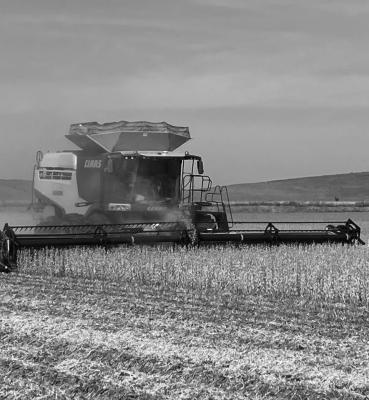
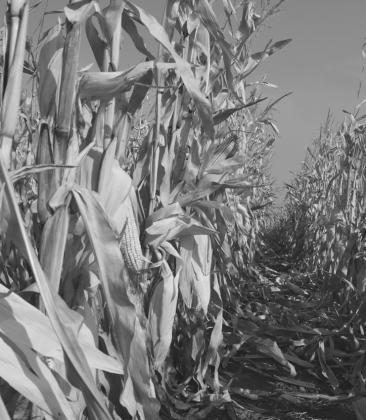
Corn and soybean harvest in west central Nebraska is slightly ahead of average and moving along quickly with the recent freeze and dry weather conditions.
However, this summer’s drought has taken a toll on yields and will be a factor moving into the 2023 growing season, note area Extension specialists and agronomists.
Sarah Sivits, a Cropping Systems and Water Extension Educator covering Dawson, Buffalo and Hall Counties, notes soybean yields have been all over the board with dryland yields very disappointing. “A number of dryland fields zeroed out this year. By the time they were planted, they struggled to germinate in the dry soil conditions and in August, when they could have benefited from a rain, there wasn’t any. Until this week’s freeze many irrigated beans were very green. Yields appear to be less than ideal but are still averaging 50-60 bushels an acre,” she said.
Dryland corners for corn were not good either, said Sivits, averaging perhaps 20-25 bushels per acre. A number of those who cut corners for silage estimated yield might have run 10-20 bushels to an acre.
Irrigated corn yields are all over the place. “I have seen lots of fields this year with poor pollination due to the extreme heat. There were so many variables this year and people are disappointed but it’s the year,” said Sivits.
Dustin O’Hanlon of O’Hanlon Seed Inc., echoed Sivits. “Yields are all over the place and very inconsistent on both corn and soybeans. It doesn’t seem to be based on variety but more on the year they had and their ground. Dryland was absolutely horrible. Heavily irrigated ground with good management had better yields.”
There were so many different variables in 2022, noted O’Hanlon. “Winds, subsoil moisture, grazing time before planting. A big thing I’ve been noticing this year is we had so much volunteer corn because it was so dry last winter the corn didn’t deteriorate.”
Another factor impacting yields was the fact that with so much gravity irrigation in the Platte Valley, farmers were unable to “water up” the 2022 crop.
To emphasize the fact there is no rhyme or reason to this year’s yield O’Hanlon noted he had a customer who had one plot yield 376 bushels per acre and the whole field with dryland corners made 312. “The field right across the road made 210 bushels to the acre. Go figure,” he said.
Three factors appeared to have made a general difference on most, but not all, yield, said O’Hanlon. “Late watering helped on both soybeans and corn. Those who chose to use a fungicide saw a difference and if they used an insecticide for spider mites in corn in many instances that was a 40 bushel per acre difference.”
O’Hanlon also had this advice for livestock people. “Before you graze cattle on any cornstalks, check them for nitrates. They are high this year. Dryland is running anywhere from 8-10,000 parts per million (ppm). A safe range is anything under 1,000 ppm. Irrigated corn ground is running 2-3,000 ppm so you need to be cautious there as well. This week’s freeze will drive nitrates down into roots, which will help.”
John Schroeder, general manager at Darr Feedlot Inc., weighed in on the feed and forage situation facing area feedlots and cow-calf producers. With producers harvesting less than a third of the crop over the previous year, the number of bushels coming out of the area are at least 16 percent less, he said.
Normally by mid-October the feedlot is finished putting up high moisture corn, but with corn about two weeks behind normal that has also hindered harvest progress.
Still Schroeder said they’ve been able to find enough grain to face 2023. “We’re blessed to be in an irrigated valley with well-managed water to get us a crop. It’s not the crop we wanted to have with yields roughly 3040 bushels below average.
“We’ve shuffled more acres east than we normally do to get more crop in to meet demand. We went 30-40 more miles than we normally do as we normally go in a 40-mile radius of the feedlot to get our grain,” he said.
The main impact from the reduced crop is the impact it has had on markets. “It has truly raised the basis from what we usually see this time of year. These are the highest fall prices we’ve ever paid for corn. Everything is 40-50 cents over basis, which means with a $7 basis we are paying up to $7.40 to $7.50 a bushel to get the corn we need,” he explained.
Another change for Darr is they have been going to South Dakota to get prairie hay for their feedlot horses and calves. “This means we will have increased freight costs in that arena,” said Schroeder. “This year we chopped a lot more silage than in prior years partly due to drought. A lot of pivot corners came in.” Across the board, Schroeder says he sees a lot of competition for winter grazing ground and the need for cornstalks to be a roughage source.