

Rising Temps Present an Overnight Threat, Too
ANILA YOGANATHAN, FLATWATER FREE PRESS
This story is made possible through a partnership between Flatwater Free Press and Grist, a nonprofit environmental media organization.
Extreme heat waves and 100-degree days often get the attention in climate change. But Nebraska’s minimum temperatures also have shot up, presenting an often unseen, overnight threat to people, livestock, and crops. This July, the average minimum temperature in Nebraska – 64.6 degrees – was tied for the state’s eighth-warmest over the past 131 years, according to the National Oceanic and Atmospheric Administration. That’s 3.7 degrees above the average from the previous century.
While Nebraska’s maximum temperatures were around average this past August, the state’s minimum temperatures were much above average, said Eric Hunt, a University of Nebraska-Lincoln agriculture meteorology and climate resilience extension educator. The trend has implications for Nebraska’s climate.
In the coming decades, Nebraska’s minimum temps could be in the low 70s – more akin to southeast Kansas and southern Missouri, Hunt said.
And it threatens the critical reprieve the human body needs from cooler nights.
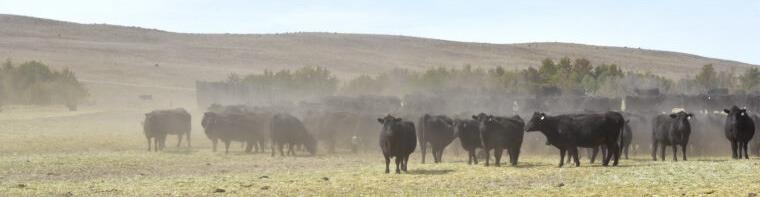
The rising nighttime temperatures also pose a concern for livestock in eastern and central Nebraska, where humidity is rising. The combination of the two prevents animals from sweating and cooling off effectively, said Rick Stowell, a UNL professor and animal environment extension specialist. Western Nebraska also has seen a rise in nighttime temperatures and humidity, but it is starting from a lower baseline Livestock, including cattle, pigs, and chickens, make up a number of Nebraska’s leading commodities. Cooling off at night can be essential for livestock that typically offload the heat they experience during the day.
To adapt, producers are building more shade structures in feedlots, something Stowell has seen more of over the last 20 years. Other strategies include increased ventilation in buildings, altered feeding schedules, and sprinkling water on the ground and in feedlots to cool.
“I don't think there's any question that every industry in the livestock industry sector in the Midwest would say that heat challenges, summer conditions are … a significant issue that we're going to have to deal (with) more and more in the future,” Stowell said.
Nebraska’s two leading crops also can be harmed – which in turn would harm a farmer’s bottom line – when nighttime temperatures stay high. Those nighttime higher temps mean that corn and soybeans use more energy instead of storing it. That can impact growth, said Tom Hoegemeyer, a retired UNL professor of practice specializing in agronomy and horticulture, and George Graef, a UNL agronomy and horticulture professor focused on soybean breeding and genetics.
Depending on the timing, duration, and intensity of these temperatures, the higher nighttime temps could result in smaller and fewer seeds and biomass for soybeans, Graef said. And if there are multiple warm days and nights, corn crops begin “shutting down and losing a week or more of filling time in late summer and early fall that we would normally get, which pretty significantly impacts yield,” Hoegemeyer said. Nighttime temperatures over 70 degrees are likely detrimental for corn crops, Hoegemeyer said. Soybean yields begin to see negative impacts when nighttime temperatures are around 73 degrees, Graef said. In the short term, there is concern that these higher nighttime temps combined with drought could mean increased usage of groundwater in irrigated production, Hoegemeyer said. While the corn industry has been aware of this issue for the last 30 years and has been able to adapt corn crops to better tolerate these conditions, Hoegemeyer is worried about how effective this will be long term. “If you believe the projections as to what temperatures will be like, say, by 2100, we may not be able to do that,” Hoegemeyer said. “There are limits to what we can do with genetics and technology.”
The Flatwater Free Press is Nebraska’s first independent, nonprofit newsroom focused on investigations and feature stories that matter.