

Raising Awareness Of a Startling Statistic
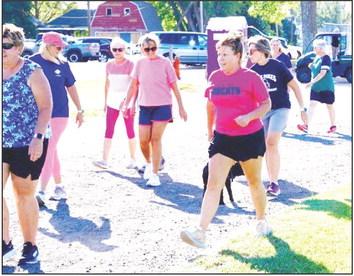
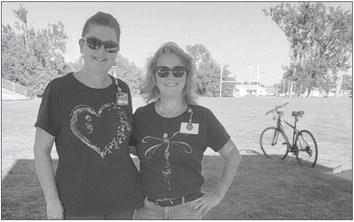
Senior Life Solutions at Callaway District Hospital hosted a Suicide Prevention and Awareness Walk on Wednesday, Sept. 20, at the Callaway Public Schools track. Along with providing suicide prevention support, education and awareness materials, SLS also served free hot dogs, chips, and bottled water.
“We had a very nice turnout of walkers and supporters of all ages; approximately 50-60 participants,” said Janel Brestel, SLS Office Patient Coordinator.
Most people may be surprised to learn that the profession with the highest death-by-suicide rate in the United States is…farmers. Agricultural workers die by suicide at a rate three and a half times higher than the general population, according to the National Rural Health Association. The organization Psychiatric Medical Care reports that between 2000 and 2002, suicide rates increased 46% in non-metro areas compared to a 27% increase in metro areas, according to the Centers for Disease Control and Prevention.
“September is Suicide Prevention and Awareness Month. As we try to raise awareness, we also want to expand resources,” explained SLS Program Director Kelly Herbig. “Because of the growing rate in rural areas, our goal is to provide services where they are often limited.”
The following is from a Psychiatric Medical Care article: “Financial stress, limited access to mental health services, and a reluctance to seek help could be associated with the elevated risk of suicide among farmers, mental health experts say. Iowa farmer and psychologist Mike R. Rosmann spent decades trying to better understand and address suicide risk in this population.
“Farming has always been a stressful occupation because many of the factors that affect agricultural production are largely beyond the control of the producers,” Rosmann wrote in the journal Behavioral Healthcare.
cont. PAGE 6 - Suicide Walk “The emotional well-being of family farmers and ranchers is intimately intertwined with these changes.”
Professors at Colorado State University and the University of Wisconsin created a checklist and guide to help identify stress and depression in farm and ranch families. These signs can be observed by anyone, including friends, extended family members, neighbors, veterinarians, clergy, school personnel, or health and human service workers. Signs of stress and depression include: Increase in illness - Farmers or farm family members may experience more upper respiratory illnesses (colds, flu) or other chronic conditions (aches, pains, persistent cough).
Increase in farm or ranch accidents - The risk of farm accidents increases due to fatigue or loss of ability to concentrate; children may be at risk if there isn’t adequate childcare.
Appearance of farmstead declines - The farm family no longer takes pride in the way farm buildings and grounds appear, or no longer has the time to do maintenance work.
Children show signs of stress - Farm and ranch children may act out, decline in academic performance, or be increasingly absent from school; they may also show signs of physical abuse or neglect.
A study by the University of Illinois found that 45% of all farmer and rancher suicides in the last 15 years were committed by people aged 65 and older. If you are experiencing any of the signs listed above, know someone who is, or would like more information, please contact Janel Brestel at 308-836-2153. Do not become another statistic.