

Presence of Corn Leafhoppers Confirmed in Southeast Nebraska
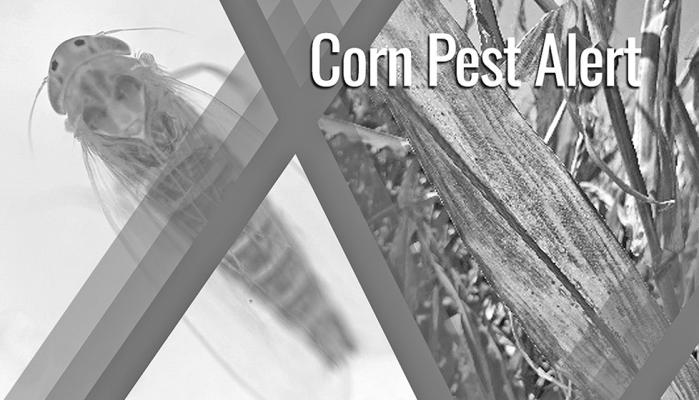
A new corn pest is creeping into the Midwest, and Nebraska growers may soon have to contend with its arrival.
In 2024, corn stunt disease and its insect vector — the corn leafhopper (Dalbulus maidis), which transmits the pathogen — were reported for the first time in Oklahoma and Kansas. Scouting efforts in Nebraska intensified during the 2024 and 2025 growing seasons in response to these detections.
Eleven symptomatic corn samples from Nebraska fields were submitted for testing in 2024, with two Jefferson County samples testing positive by initial PCR tests for corn stunt. An additional sample submitted from Burt County, Nebraska tested positive for corn stunt spiroplasma (CSS) (by DNA sequencing analysis), one of the pathogens responsible for causing the disease..
Scouting for the corn leafhopper also expanded, leading to confirmation of the insect’s presence in late summer and early fall 2024 in Adams and Clay counties in southeast Nebraska, Burt County in northeast Nebraska, and Dawson County in central Nebraska.
Sampling during the 2025 growing season confirmed the presence of corn leafhopper in Kansas and, on Aug. 18, in a single field in Clay County, Nebraska. To date, CSS has not been detected in Nebraska this year.
So far, the arrival of corn leafhopper and the corn stunt pathogen(s) it carries has occurred late enough in the 2024 and 2025 growing seasons that economic damage in Nebraska is unlikely.
We encourage stakeholders to reach out to their local extension office and submit suspicious samples to the Plant and Pest Diagnostic Clinic if they suspect the presence of this disease or its insect vector in their fields.
The earliest symptoms of corn stunt disease are leaf yellowing (chlorosis) or reddening of leaf tips (Figure 1a). If plants are infected during vegetative stages, the stalk internodes may be shortened, causing plants to be stunted in appearance. Corn stunt disease may also lead to development of multiple ears or shortened, stunted ears, or the production of tillers.
Please contact Nebraska Extension for more information.