
Please Help Save Callaway’s Historic Church Windows
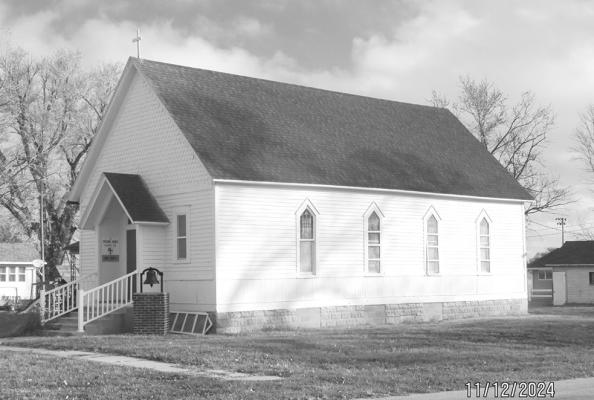
The Holy Trinity Episcopal Church is an icon in Callaway. Its history is a story of resilience and the pioneer spirit that defined the pioneers of western Nebraska and Custer County. Now, the church needs help.
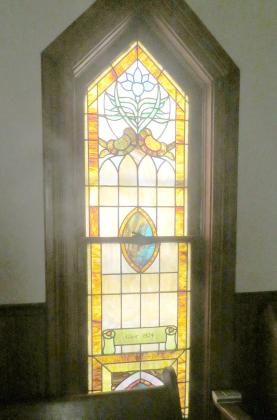
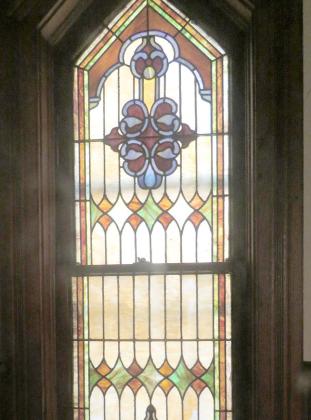
The Seven Valleys Museum board has launched a fundraising effort to restore the beautiful windows of the historic church. The building’s nine stained glass windows are in need of re-leading, repair to the sills, and a covering to protect them from storms. The board has received three bids for the project from Associated Crafts-Willet Houser; however, they agree that at this time only one of those is financially possible.
The bid to remove the existing screens, re-cement the stained glass windows on the existing surface, remove loose paint on the outer surface, apply a primer coat and finish coat, and install the protective covering on all nine windows is $20,953. The board explained that once all windows have been protected the plan would be to re-lead them as funds allow, beginning with the one in the worst condition.
The board is asking the community for help by “adopting” one of the windows to see it through the restoration process financially. The “adoption” can be made by individuals, organizations, businesses, or even just a group of friends who want to help preserve the church’s history.
The Episcopal church was one of the first churches in Callaway, founded by settlers of Canadian and English descent. The church was built in 1890 with a price tag of $1,500.
The most outstanding furnishing of the new church was the bell, cast by John Taylor and Co. of Laughborough, England - the same company that cast the Liberty Bell. The company agreed to make the bell if the church would agree to pay the freight for shipment, and the new congregation soon had a cousin to the Liberty Bell in its tower.
On June 4, 1894, a tornado ripped the church off of its foundation and caused considerable damage. The church was moved to a new location where it was repaired and a furnace installed. A rectory was also built at that time at a cost of $950. Just a year later the church was free of debt, and on July 7, 1895, it was organized as a mission under the rule of the Diocese of the Platte.
By 1900 the church was hosting morning and evening services every Sunday. The Ladies Guild, organized in May 1890, purchased the first organ in Callaway and also furnished the seats, communion rail, and altar for the church. By the turn of the century the church had 40 teachers and scholars in the Sunday school; however, those numbers dwindled throughout the years, and the Sunday school was eventually dropped until 1946, when it was given new life.
In 1909 the Episcopal Church installed a pipe organ purchased from the Episcopal Church in Kearney. Mrs. Belle Hoskins and Glad Lamb both served as organists for many years.
At one time the church windows were removed and sent to Omaha for repair, funded by the Ladies Guild. The nine memorial windows include one dedicated to the No-Name Club, which is perhaps one of the most unique features of Holy Trinity’s past.
The No-Name Club was founded in Ireland as an alternative to pub culture for young people, to demonstrate a cheerful social life free of drugs or alcohol. The
cont. PAGE 16: Church club was formed in 1911 under the leadership of Father Dows and had 24 charter members. They met every Wednesday night and played bridge, a tradition that continued until 1967.
The church is part of the heritage and rich history of Callaway, and the museum board is asking the community to be there just as they were in 1894 after the tornado, to help restore the church again.
That request is being heard, as just a few days ago the board received its first sponsorship for one of the windows. John Deardorff lived in Callaway in late 1940’s. His father ran Timm Funeral Home. He said that the family left Callaway in 1950 after the death of his 9-yearold brother. Though not exactly a pleasant memory, his brother’s funeral was held in the Episcopal Lutheran Church, and therefore holds a special place in John’s heart. He wanted to help preserve its heritage.
If you would like to help, donations can be made to any of the museum board officers: President Dave Chesley, Vice President Steve Miller, Secretary Jo Chesley, or Treasurer Chistianna Johnson. Gifts can also be mailed and checks made payable to: Seven Valleys Museum, PO Box 293, Callaway, 68825, ℅ Window Project.