

Why The Feeders Might Be Empty

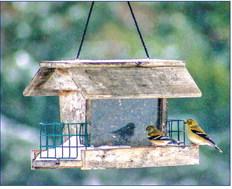
Where have all my birds gone? That’s a question that I’ve been asked a number of times. I really didn’t think much about it. I did, however, start to notice my feeder and realized that the same birds that they were concerned about were also absent from my feeder.
It was spring, and the activity at the feeders always slows down at that time so I didn’t think any more about the lack of gold finches, house finches, and pine siskins. That is, until today.
I received a call from Chris Johnson from Grant.
Chris once lived in Gothenburg, and he called to see if I had an answer as to why the number of goldfinches at his feeder in Grant was fewer than last year. I didn’t have an answer, so I started to do a little research.
What I found didn’t please me.
In a study published in the journal “Nature”, it was stated that since 1970, the overall number of songbirds in North America had decreased by three billion individuals. That is almost 30%! In a follow-up study published last year the drop in the number of grassland birds, those most common around Gothenburg, was 43%!
I went back and looked at “Feeder Watch” data.
This is a citizen science project sponsored by the Cornell Lab. I looked at this past winter and the winter before, and the data for Nebraska showed a 19% decrease in reported sightings at feeders here in the State last year.
However, you have to be careful about jumping to conclusions because there are any number of things that can impact bird use of a feeder year to year. So instead of looking at just two years of data, I looked at the trend in individual species from 1990 to 2025.
Because goldfinches are the birds that were specifically talked about, I looked at the trend for them. The percentage of feeders being observed that have had goldfinches hasn’t changed much since 1990. It hovers between 70% – 75% of all feeders here in Nebraska.
However, the number of individual birds at those feeders has dropped 40% over that time period! It is worse in the southeastern U.S., where goldfinch numbers have dropped 73%.
Why? No one really has the answer. It could be habitat loss, pesticides, or disease. House finch eye disease (Mycoplasmal conjunctivitis) for example. While, as the name implies, it is more common in house finches, it does affect other finches.
Another reason might be weather. January of 2023 and 2024 were cold ones. That could have taken its toll on the population of non-migrating birds like the finches. Then you have drought. The last three winters, central Nebraska has experienced various times of drought. This can impact the abundance of plants that provide food for the finches. I could speculate on other potential causes, but even the extensive studies published in “Nature” and by the National Audubon Society have not been able to identify a specific single cause to explain this drop in bird numbers.
In the meantime, I would suggest you continue to provide supplemental food for the birds in your feeders.
Looking at the numbers, it is obvious they can use all the help they can get.