

Be Watchful – It's Monarch Migration Time

It is migration time again. As of this writing over eight million birds have flown over Dawson County on their way south for the winter. By the end of the bird migration in November, more than 56 million will have flown over us!
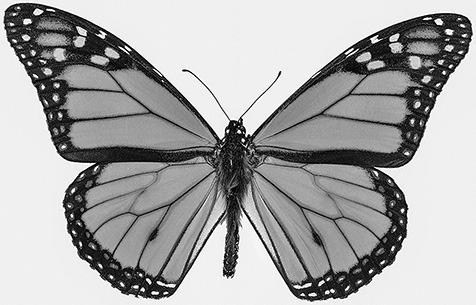
That wasn’t what got me to thinking about migration, however. It’s the monarchs. As I’ve talked about before, the eastern monarch butterfly is one that migrates from Mexico to the Canadian border. On their way north they will fly a ways, lay eggs on milkweed plants and die. The eggs will hatch, and the larvae will feed for two weeks and then pupate. It will remain in the chrysalis for another two weeks and then emerge as an adult, which continues north. They will do that three more times before summer comes to an end.
At that time, the 5th generation will turn around and head back south. What took four generations taking about eight weeks each to complete their journey north, one generation will repeat the journey in reverse, traveling back to specific mountains in Mexico. The journey can be as long as 3,000 miles taking the butterfly another eight weeks to get to their mountaintop.
The western monarch doesn’t have as long of a trip. They go northward to Oregon, Washington, and Canada, and then in the fall they return to southern California, where they overwinter along the coast in eucalyptus groves. The western monarch population has been in decline, going from millions to thousands, and is a species of conservation concern.
The eastern monarch butterfly is equally threatened, if not in more danger. They overwinter in pine trees in Mexico, and the thousands congregated last winter in only 4.4 acres! As crazy as that is, it was twice the area they occupied the year before! What got me thinking about them is the fact that I am seeing a lot of monarchs flying around and only a week or two ago I saw a monarch caterpillar. The adults lay their eggs on milkweeds, the eggs hatch into caterpillars, and the caterpillars feed on the leaves of the milkweed. The adult monarchs feed on nectar from a variety of different flowers, and that is one reason you are encouraged to plant a pollinator garden. With a variety of plants you can feed a variety of bees, moths, and butterflies throughout the entire spring, summer, and fall.
I’m watching closely each afternoon for concentrations of monarchs. A few years ago, they concentrated in my trees for a day. There were hundreds of them, if not more. The next year, they were in Cathy Simon’s yard. I took pictures, but the pictures don’t do justice to seeing hundreds or thousands of butterflies in a single tree…low enough to touch! I added that to my list of my most amazing nature experiences.
So when did the monarchs congregate in Cathy’s yard and mine? This time of year, so be on the lookout. They might just congregate in your yard this year!